

Performance cap crown shape retention depends on shell stiffness, support layers, seam balance, pressing and packaging. Fabric stiffness tests can compare materials, but they do not replace a finished-cap recovery check. Brand buyers should lock the approved crown profile, measurement points, fabric direction, reinforcement, conditioning and packing method before bulk production. The acceptance rule should compare production caps with the approved sample under the same setup.
Define the crown profile the brand wants to repeat
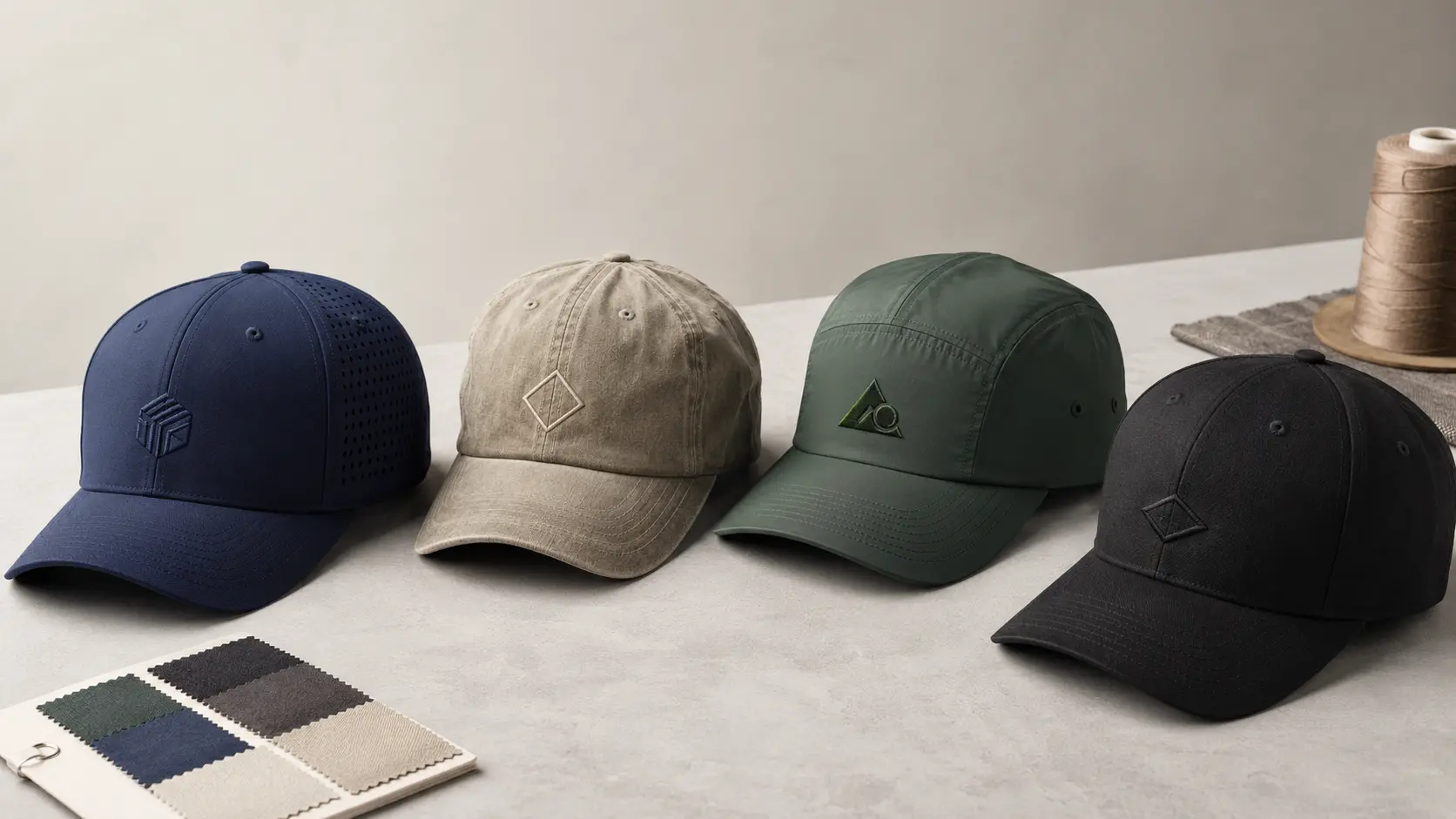
Structured, semi-structured and unstructured are useful design labels, yet factories still need observable geometry. Record front height, side height, crown depth, peak position, front-panel bow and the transition into the visor. Use side, front and top photographs from a fixed distance.
ال performance cap fit specification can hold circumference and depth. Add profile controls so two caps with the same measurements do not look different on a headform.
| Profile feature | How to record it | Visual failure |
|---|---|---|
| Front height | Fixed points from visor seam to crown top | Front appears too low or too tall |
| Front-panel bow | Side photograph on an agreed headform | Panel looks flat, swollen or dented |
| Peak position | Top and side reference views | Crown leans forward or backward |
| Side-wall angle | Headform overlay or simple template | Cap looks narrow, boxy or uneven |
Use fabric stiffness data for material comparison
ASTM D1388-23 measures bending length and calculates flexural rigidity. Its official scope includes woven, knitted, layered and treated fabrics, while the method notes that the procedures are generally more suitable for woven fabrics than knits. The standard also notes that storage can change stiffness.
ASTM D4032-26 measures fabric stiffness by a circular-bend procedure and averages resistance in all directions. It can be used for woven, knitted and nonwoven materials within the gauge range. These tests help compare materials under a named method, but neither one predicts the full crown by itself.

Specify direction, face and layer state
Woven and knitted textiles can bend differently by direction. Mark warp and weft or course and wale on retained swatches. Test the same face orientation and conditioning for every comparison.
A laminated front panel should be assessed as the actual layer system when the bonding changes stiffness. Record shell, fusible, foam or backing separately and as assembled where practical. A shell-only number cannot explain a supported front.
| Material variable | Record | Reason |
|---|---|---|
| Fabric direction | Cut orientation for every crown panel | Bending behavior may differ by direction |
| Support layer | Type, weight, coverage and bonding side | Front-panel structure changes |
| Finish | Finish code and application lot | Hand feel and recovery may shift |
| Storage condition | Time, humidity and roll handling | Material stiffness may drift before cutting |
Control front-panel reinforcement
Front support can use woven buckram, nonwoven fusible, foam or another stabilizer. The best option depends on logo density, shell weight, desired hand feel and wash or care expectations. More support is not automatically better because an overly rigid panel may crease sharply or feel hot.
State the exact support code, cut shape and bonding area. Keep it clear of seam allowances where bulk would distort the crown. Test the logo on the supported panel because embroidery and patches change local stiffness.
Balance seams and panel geometry
Crown shape can twist when paired panels differ, seam allowances are inconsistent or topstitch tension pulls one side. Check the crown join, front seam, side seams and top button location before pressing masks the problem.
Use the seam strength guide together with visual balance checks. A strong seam can still create a poor profile when feed or tension is uneven.
Set pressing as a controlled operation
Steam, heat, pressure, dwell time and headform shape affect the finished crown. Record the approved settings by material family. Too much heat may glaze a synthetic shell, soften adhesive or leave a hard edge at the reinforcement boundary.
Inspect the cap after it cools and after it leaves the form. Cooling time lets the team see whether the profile holds or relaxes. Keep a pressing reference with the approved production sample.
| Pressing control | Check | Possible defect |
|---|---|---|
| Headform | Approved size and crown profile | Wrong peak or side angle |
| Heat and steam | Material-compatible setting | Gloss, shrinkage or adhesive damage |
| Pressure and dwell | Repeatable machine setting | Hard crease or insufficient shaping |
| Cooling | Defined rest before inspection | Temporary shape mistaken for stable recovery |
Run a repeatable compression and recovery check
A finished-cap check can simulate box pressure or short-term deformation. Define the headform, load, contact area, duration, recovery time and viewing angle. Compare the result with the approved sample and agreed profile template.
This check is useful for development and bulk control when the method stays constant. It should not be presented as an industry standard unless a recognized method is actually followed. Record dents, seam twist, front-panel collapse and asymmetric recovery.
Test the cap in its shipped state with the closure set to the agreed position. An open strap, tight snap setting or folded sweatband can change how pressure travels through the crown. Use a clean support surface so the brim does not introduce another variable.
Approve packaging with the cap, not after production
Even a stable crown can deform in a box that is too low, too full or unsupported. Approve insert shape, nesting count, inner-box dimensions, master-carton dimensions and stacking direction during the sample stage.
Run a packed-carton trial before bulk shipment. Open the carton after an agreed holding period and measure recovery after unpacking. The sample-to-bulk quality plan should treat packaging as part of the product system.
Photograph the pack sequence and number every layer in the carton. If protective inserts are removed to reduce freight, repeat the compression trial before approving the change. Freight savings should be weighed against re-pressing, returns and lost selling time.
Review shape across the size range
A crown pattern may be graded for youth, standard and XL fits. The support piece, logo position and visor relationship may also need adjustment. Do not scale only the circumference and assume the approved profile will carry across every size.
Place each size on its matching headform and use the same front, side and top views. Record depth and profile together. This prevents a larger cap from meeting circumference while appearing too shallow or too flat.
Check decoration before the profile is locked
Embroidery pulls fabric inward and can flatten a curved front panel. A thick patch can hold one area rigid while the surrounding shell relaxes. Heat application may also change support adhesive or leave a press outline.
Approve the actual logo process on the intended panel stack. Keep the embroidery stitch count, backing, patch size and heat settings with the sample. If the logo changes after crown approval, repeat the front-profile review before bulk production.
Set bulk tolerances from the approved sample
Do not invent a universal crown tolerance. Measure the approved sample set, understand normal manufacturing variation and define the points that affect fit and appearance. Use the same headform and measuring technique at incoming, inline and final inspection.
Keep one sealed sample with production and one with the buyer or quality team. If the sample is softened by repeated handling, replace the working reference from the controlled approval file.
| Inspection stage | Control | Release evidence |
|---|---|---|
| Incoming material | Shell and support codes plus comparative stiffness | Approved lot identity |
| Panel preparation | Cut direction, support placement and bonding | Correct panel assemblies |
| Sewing and pressing | Seam balance, headform and settings | Stable crown profile |
| التعبئة والتغليف | Insert, nesting, carton height and recovery check | Shipment configuration approved |
Investigate shape failures by process stage
A soft front may come from the wrong reinforcement, low bonding, excess humidity or a shell substitution. A twisted crown may point to panel cutting, mismatched feed or seam tension. A dent that appears only after packing usually needs a carton and insert review.
Separate material, sewing, pressing and logistics causes before changing the pattern. One correction can create another problem if the root stage is missed.
Keep comfort and appearance in the same decision
A stiffer cap is not automatically more durable or more premium. It may hold a sharp profile while increasing heat and pressure. Review stiffness with fit, breathability, weight and intended sport.
Use the fabric weight and thickness guide و stretch and recovery guide to understand the wider material balance. The approved sample should resolve those tradeoffs before bulk tolerances are fixed.
Frequently asked questions
Can fabric stiffness predict the finished crown shape
It helps compare materials, but the finished profile also depends on panel geometry, support layers, seams, pressing, logo application and packing.
Should woven and knit fabrics use the same stiffness target
No universal target applies. Use a suitable method and compare like materials tested under the same conditions.
When should the support layer be tested with the shell
Test the assembled layer system when bonding materially changes bending and recovery. Keep component records as well.
How long should a compressed cap recover before inspection
The buyer and factory should agree on a fixed recovery time that represents the packing study. Use the same time for approval and bulk checks.
Can pressing correct a sewing imbalance
Pressing may hide it temporarily. Correct panel feed, seam allowance and tension before relying on shaping.
What should a buyer send for a crown-shape quotation
Send your brand or website, cap style, quantity per style and color, vector logo file, target market, destination, required delivery date, reference sample and preferred crown profile.
Prepare a crown-development brief for JoinTop
Share your brand or website, cap style, quantity per style and color, vector logo file, target market, destination and required delivery date. Add front and side references, fit dimensions, support preference, packing limits and any benchmark cap. اتصل بـ JoinTop or use the inquiry form at the bottom so the crown construction and approval plan can be reviewed before quotation.


 AR
AR  EN
EN  ES
ES  FR
FR  JA
JA  KO
KO  RU
RU  DE
DE  PT
PT  IT
IT  TR
TR