

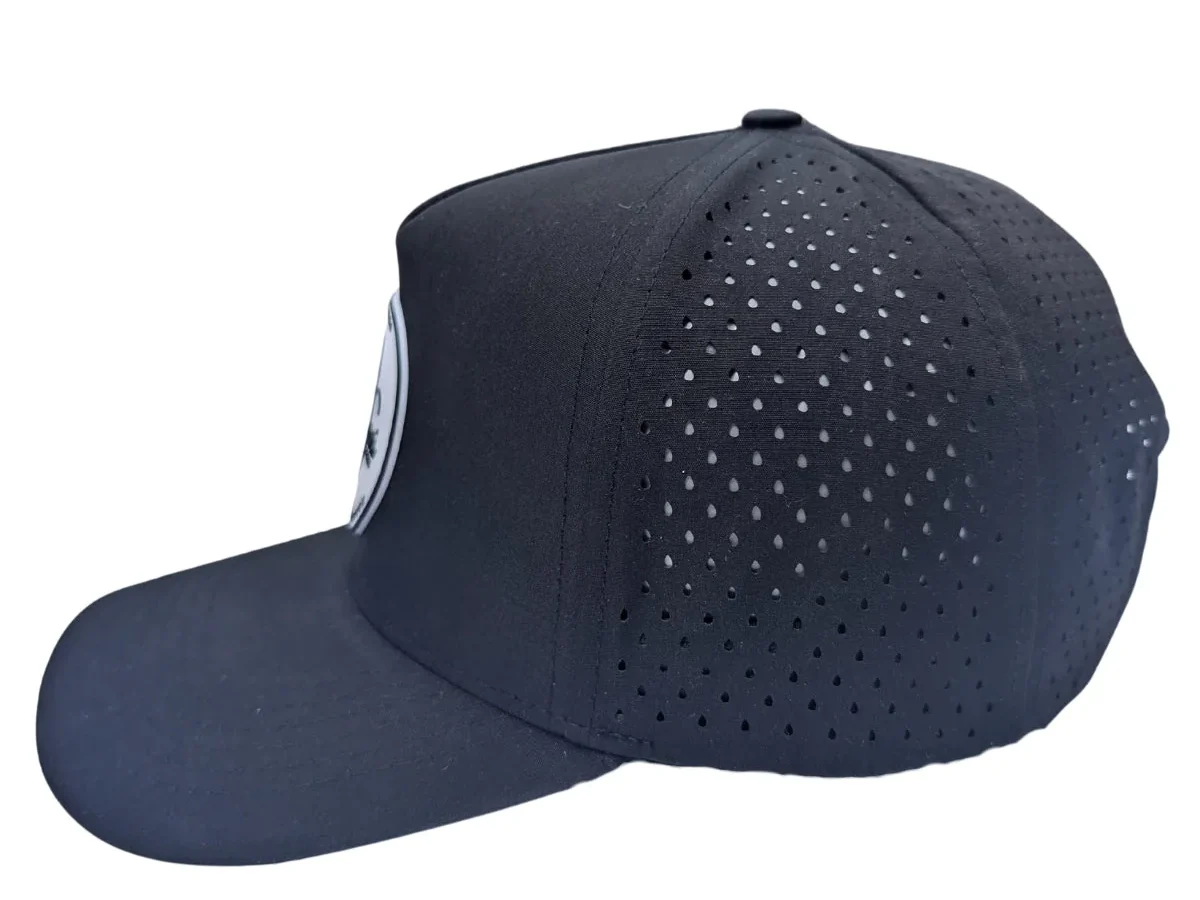
Laser-cut perforation for performance caps is a controlled pattern of heat-cut ventilation holes in the side or rear panels. A useful factory specification defines the hole size, spacing, panel location, seam clearance, logo keep-out area, and acceptable edge appearance. Without those details, a sample may look breathable in a photo yet show distorted holes, heat marks, or weak areas when it is worn.
This buyer guide is for product managers and sourcing teams developing private-label running, golf, training, or outdoor headwear. If you are still choosing the base construction, review the available custom sports cap options before locking the ventilation pattern.
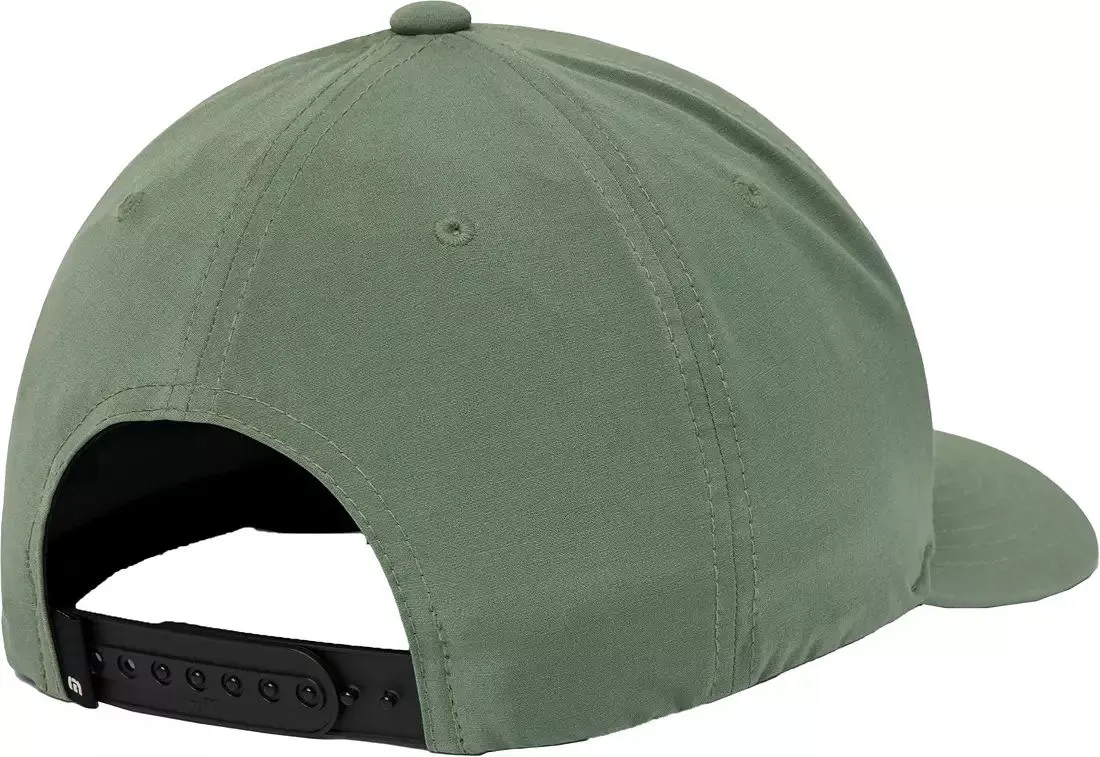
Why perforation problems appear after sampling
Most problems begin when the development request says only “laser holes on the side.” The factory must then decide the pattern, hole diameter, distance from seams, and how the panel will be handled during sewing. Those choices affect appearance, airflow, strength, and repeatability.
Four risks deserve attention:
- Panel distortion: soft or stretchy fabric can move during cutting, turning round holes into an uneven pattern.
- Visible heat rings: the cutting setting may leave dark or glossy edges on certain colors and finishes.
- Tear initiation: holes placed too close to a seam, dart, or panel edge can concentrate stress.
- Artwork conflict: embroidery or a patch can cover the ventilation field or pull nearby holes out of alignment.
Fabric selection comes first. Our overview of performance hat materials explains why two fabrics with the same fiber name can behave differently because of weight, weave, stretch, and finish.
What to put in a laser-perforation specification
A drawing is more reliable than a reference photo alone. Mark the perforated zone on the panel pattern or a flat-view sketch, then add measurable requirements.
| Specification item | What the buyer should define | Why it matters |
|---|---|---|
| Hole geometry | Round, oval, slot, or custom shape | Changes both the visual identity and the remaining fabric between holes |
| Hole size | Nominal width and height, with an agreed tolerance | Prevents one colorway from looking more open than another |
| Pitch | Center-to-center horizontal and vertical spacing | Controls pattern density and row consistency |
| Perforated zone | Start and stop points measured from panel edges or notches | Keeps the design aligned after panels are sewn |
| Keep-out zones | Clearance from seams, darts, eyelets, logos, labels, and closures | Reduces stress and prevents visual collisions |
| Edge standard | Acceptable discoloration, fused edge, residue, and loose fibers | Makes cosmetic approval objective |
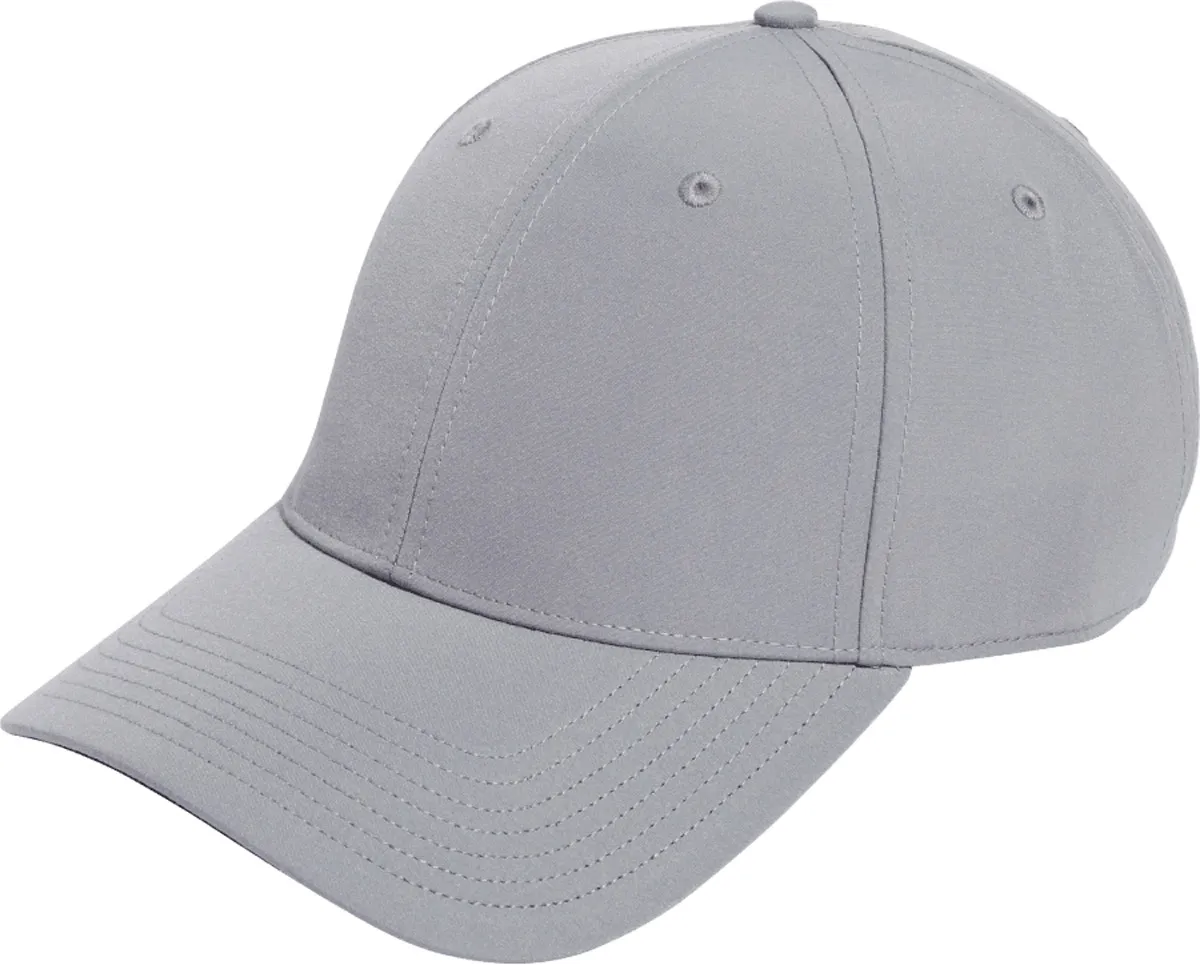
How to assess the development sample
1. Check the pattern before checking individual holes
View the cap from the side, rear, and top. The field should sit in the intended visual position when the crown is three-dimensional. Straight rows on a flat panel can appear tilted after sewing, so approve the finished cap rather than the loose panel alone.
2. Compare both sides
Measure corresponding locations on the left and right panels. Look for differences in the first row, the distance from the back seam, and the gap below the crown seam. A small placement difference is often more visible than a small hole-size difference.
3. Inspect light and dark colors separately
A cutting setting that works on one color may leave a different edge appearance on another. Request a perforation trial on every production fabric and color rather than approving the pattern on a substitute swatch.
4. Apply stress where the cap will be handled
Flex the panel, put the cap on the intended head form, and inspect the rows closest to seams and the closure. For programs that need a formal fabric-strength reference, ASTM D2261 describes a tongue-tear test for fabrics. The relevant test method and pass criteria should be agreed with a qualified lab for the actual material; a standard name by itself is not a product guarantee.
5. Review the cap after logo application
Embroidery tension and backing can change the front-panel shape and may pull on adjacent perforated areas. Approve the complete construction with the final logo technique, sweatband, closure, and brim rather than an unbranded shell.
Controls that help bulk production match the sample
Once the sample is approved, turn the decisions into production records. Keep a signed physical sample, the final panel drawing, the approved cutting file, color-specific machine settings, and close-up photos of acceptable edges. During production, inspect the first cut panels before the full lot proceeds. Then check perforation placement again after sewing because panel feeding and seam allowance can shift the finished result.
A clear handoff between sampling and production is part of a reliable cap production process. If the artwork or construction changes, issue a new revision rather than marking the old file informally.
Information to send for a useful sample review
- Cap profile and panel construction
- Intended sport, climate, and wearing conditions
- Fabric composition, weight, stretch direction, finish, and color
- Perforation drawing with dimensions and keep-out zones
- Logo artwork, size, placement, and application method
- Target quantity by color and required delivery destination
These details let the supplier review feasibility before cutting a full sample. For other branding choices that may affect the crown, see the available cap customization methods.
Frequently asked questions
Does more perforation always mean better airflow?
No. Air movement also depends on fabric permeability, the sweatband, lining, fit, and where the holes sit on the crown. A dense pattern can also reduce the amount of material between holes. Evaluate the full cap in its intended use.
Can the same laser setting be used for every fabric color?
It should not be assumed. Dyes, coatings, fabric weight, and composition can change the cut edge. Approve a trial on each actual production material and color.
How close can perforations be to a seam?
There is no universal distance for every construction. The safe clearance depends on the fabric, hole pattern, seam allowance, thread, and load in that area. Define and validate it during development.
Should the first sample use the final logo?
Yes, when possible. The logo method can change panel stability and may require a larger keep-out zone. A blank sample cannot confirm the complete interaction.
Prepare your performance cap project for sampling
If your brand is developing a ventilated performance cap, send the intended use, panel reference, fabric preference, perforation drawing, logo file, quantity by color, destination, and delivery target through our Contact Us page. You can also go directly to the inquiry form at the bottom of this page. A specific brief helps our team respond with the right construction questions and sampling path.



 EN
EN  ES
ES  FR
FR  AR
AR  JA
JA  KO
KO  RU
RU  DE
DE  PT
PT  IT
IT  TR
TR