

Performance cap quality control from sample to bulk depends on a released specification, an approved physical reference, and checks at the points where errors can still be corrected. The buyer and factory should agree on critical, major, and minor defects, measurement methods, tolerances, inspection timing, and the sampling plan before production starts. A final inspection alone cannot repair a wrong material or repeated sewing error.
This process is especially important for lightweight caps because perforation, stretch fabrics, curved seams, logo application, and brim shaping interact. If you are defining the base product, begin with the construction options for custom sports and performance caps.
Why an approved sample is not enough
A sample proves that one cap can be made. Bulk control must prove that the approved decisions are transferred to materials, cutting, decoration, sewing, finishing, and packing across the order. Problems often arise when:
- The physical sample contains a change that never reached the tech pack
- A substitute fabric or component is accepted verbally
- Measurement points are named but not illustrated
- The logo is checked alone rather than on the assembled crown
- Inspection begins after the full lot is already packed
The solution is a control plan tied to the actual production sequence.
The documents to release before bulk production
| Control document | What it should contain | Owner question |
|---|---|---|
| Released tech pack | Construction, measurements, tolerances, materials, artwork, labels, and packaging | Is every sample change included? |
| Approved physical sample | Signed or sealed reference with approval limitations noted | Which features are the visual standard? |
| Component card | Fabric, sweatband, closure, thread, labels, and color references | How will substitutions be prevented? |
| Defect classification | Critical, major, and minor defect examples for this style | Which issues make the product unusable or commercially unacceptable? |
| Inspection plan | Stages, sample selection, acceptance rule, reporting, and escalation | Who decides whether production continues? |
Link the documents with a style code and revision number. A factory should not have to decide whether the PDF, email, annotated photo, or physical cap is the newest instruction.
Control quality at five production stages
1. Incoming material review
Confirm fabric article, composition, weight or hand feel reference, color, stretch direction, finish, and usable width. Check the sweatband, closure, labels, thread, backing, and packaging components before they are issued. When color matching is important, review materials under the agreed lighting conditions and against the approved standard.
2. Cutting and perforation approval
Inspect the first cut panels for orientation, notches, seam allowance, shade grouping, and perforation placement. The remaining material between laser holes must be consistent and free from unacceptable heat marks. If tear performance is a defined product risk, ASTM D2261 is one published tongue-tear test method for fabrics. A qualified lab and the buyer should agree on the relevant method, specimen, and pass criteria for the actual material.
3. First finished cap review
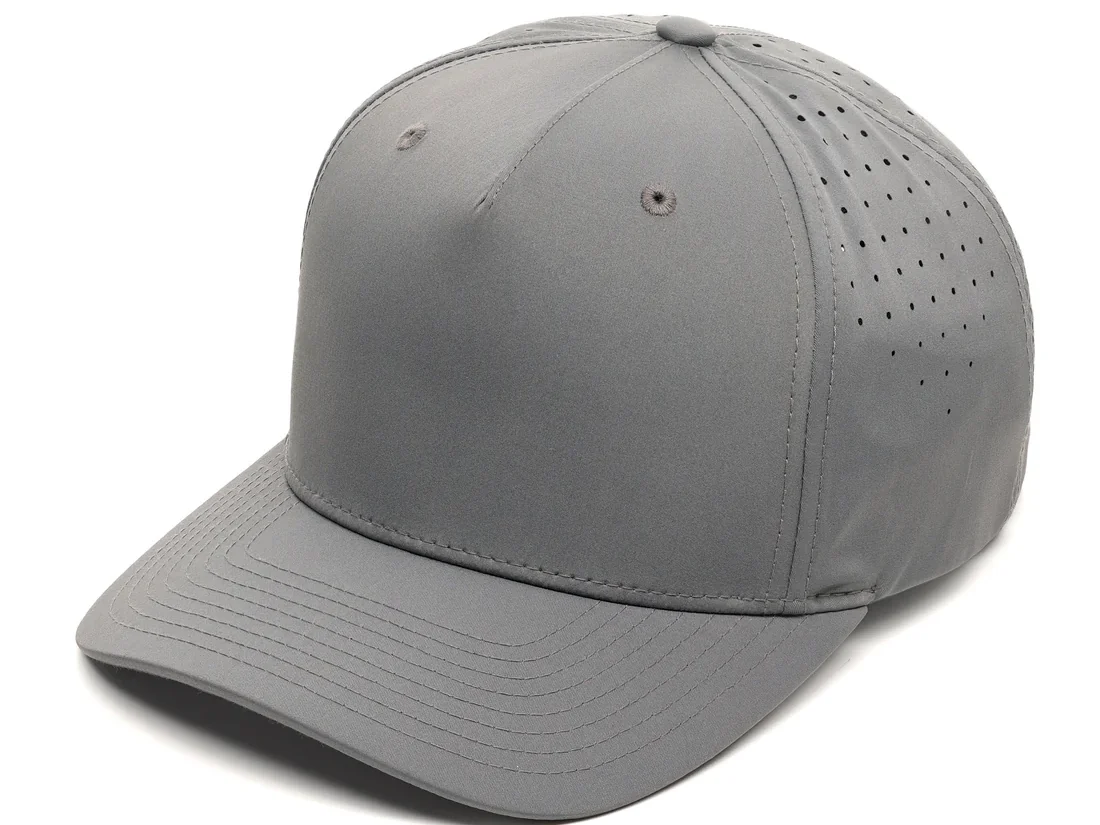
Review the first complete units before the line continues at full volume. Check crown profile, symmetry, brim curve, inside circumference, sweatband attachment, closure function, logo position, seam appearance, and all labels. A component can pass separately and still distort the finished cap after assembly.
4. In-line inspection
Sample work from different operators, bundles, and times rather than taking adjacent caps from one carton. Track repeated defects by operation. A rising trend in skipped stitches, puckering, off-center logos, or uneven perforation placement calls for correction at the source, followed by review of units already produced.
5. Final and packing inspection
Use the agreed sampling plan across finished cartons. Verify appearance, measurements, function, quantity, color and size assortment, barcode or label data, polybag requirements, carton marks, and protection for the brim and crown. Photograph representative defects with the style code and measurement scale visible.
This sequence should be reflected in the factory’s cap production and quality process, with clear responsibility for approval and corrective action.
Build a style-specific defect list
A generic checklist will miss the features that carry the most risk for your cap. Define examples before inspection.
| Area | Examples to define | How to make the check objective |
|---|---|---|
| Fit | Inside circumference, crown depth, closure range | Illustrated measurement method and tolerance |
| Appearance | Crown symmetry, brim shape, seam alignment | Approved sample and viewing position |
| Decoration | Logo size, position, puckering, loose thread | Artwork page, placement dimensions, defect photos |
| Ventilation | Missing holes, shifted field, heat marks, tearing | Perforation drawing and edge standard |
| Function | Closure operation, elastic recovery, sweatband attachment | Simple repeatable function check |
| Compliance data | Fiber, origin, identity, care or market labels | Approved label artwork and destination list |
For U.S. programs, the Federal Trade Commission’s guide to textile labeling requirements is a useful primary reference. The importer or brand should confirm the exact obligations that apply to its product and market before approving label artwork.
What a useful inspection report should show
The report should identify the purchase order, style, color, quantity, inspection stage, cartons or units sampled, specification revision, result, and unresolved decisions. Each defect photo needs enough context to locate the issue. Measurements should show the nominal value, tolerance, actual result, and measuring method. “Looks wrong” is difficult to correct; “front logo center is outside the approved placement range” is actionable.
Agree in advance what happens after a failed check: containment, sorting, rework, replacement, reinspection, or buyer review. The applicable commercial terms should be captured in the order documents and aligned with the published product warranty information.
Frequently asked questions
What is a golden sample?
It is the approved physical reference used with the released specification. It should be identified, protected from uncontrolled changes, and accompanied by notes explaining any characteristics that are not approved.
Can the final inspection replace in-line checks?
No. A final inspection can detect issues, but late discovery makes correction slower and more disruptive. Incoming, first-unit, and in-line checks address risks while materials and work are still accessible.
Who sets the measurement tolerances?
The buyer and manufacturer should agree on tolerances that protect fit and appearance while reflecting the material and construction. Copying a generic tolerance table without reviewing the style can create false precision.
Should every defect have the same severity?
No. Severity depends on safety, legal compliance, function, appearance, and the buyer’s approved standard. Classification should be agreed before inspection so the result is not negotiated after defects are found.
Set the quality plan before placing the order
To discuss a performance cap program, send your brand website, style or tech pack, intended use, quantity by color, key measurements, logo files, quality concerns, destination, and delivery target through our Contact Us page. You can also use the inquiry form at the bottom of this page. These details help our team identify the sample approvals and production checkpoints that should be included in your project workflow.



 EN
EN  ES
ES  FR
FR  AR
AR  JA
JA  KO
KO  RU
RU  DE
DE  PT
PT  IT
IT  TR
TR