

Performance cap UPF testing should verify the exact fabrics, colors and panel constructions used in production. A laboratory result for one solid fabric does not automatically cover mesh, laser perforations, stretched areas or a different color. Brand buyers should define the test method, specimen locations, dry or wet condition, claim scope and report format before approving a UPF statement. The brim's shade coverage should be reviewed separately because UPF describes ultraviolet transmission through material, not the amount of face or neck covered by a cap.
What a UPF result tells a performance cap buyer
Ultraviolet protection factor describes how effectively a textile limits erythemally weighted ultraviolet radiation passing through it. The AATCC TM183 method covers measurements on fabrics in dry or wet status and calculates UPF as well as UVA and UVB blocking. It is a material test, so the purchase specification must connect each result to an identified fabric and construction.
A higher laboratory value can support a stronger material claim, yet the result says nothing about uncovered skin. A curved visor may shade part of the face while leaving the ears and neck exposed. Product copy should keep fabric protection, cap coverage and user instructions separate.
| Buyer question | Evidence to request | Decision supported |
|---|---|---|
| Which material was tested | Fabric code, composition, weight, color and finish | Whether the report matches the approved cap |
| Was the specimen dry or wet | Condition stated in the laboratory report | Whether the intended running or outdoor use is represented |
| Were openings included | Separate results or a written exclusion for mesh and perforations | How narrowly the UPF claim must be worded |
| Which claim is proposed | Label copy tied to applicable market requirements | Whether packaging and online descriptions are supportable |
Write the UPF requirement around the actual cap
A usable specification names the shell fabric, underbill, side panels, sweatband and any lining that affects coverage. It also identifies where perforations begin and end. The same base textile can transmit more ultraviolet radiation after holes are cut into it or when the material is stretched across a crown.
Color belongs in the specification. Dye concentration and finishing can change transmission, so a result from black should not be assigned to white without technical evidence. If a collection uses several colorways, agree with the laboratory on the testing plan before the sample round.

Choose specimen locations before testing
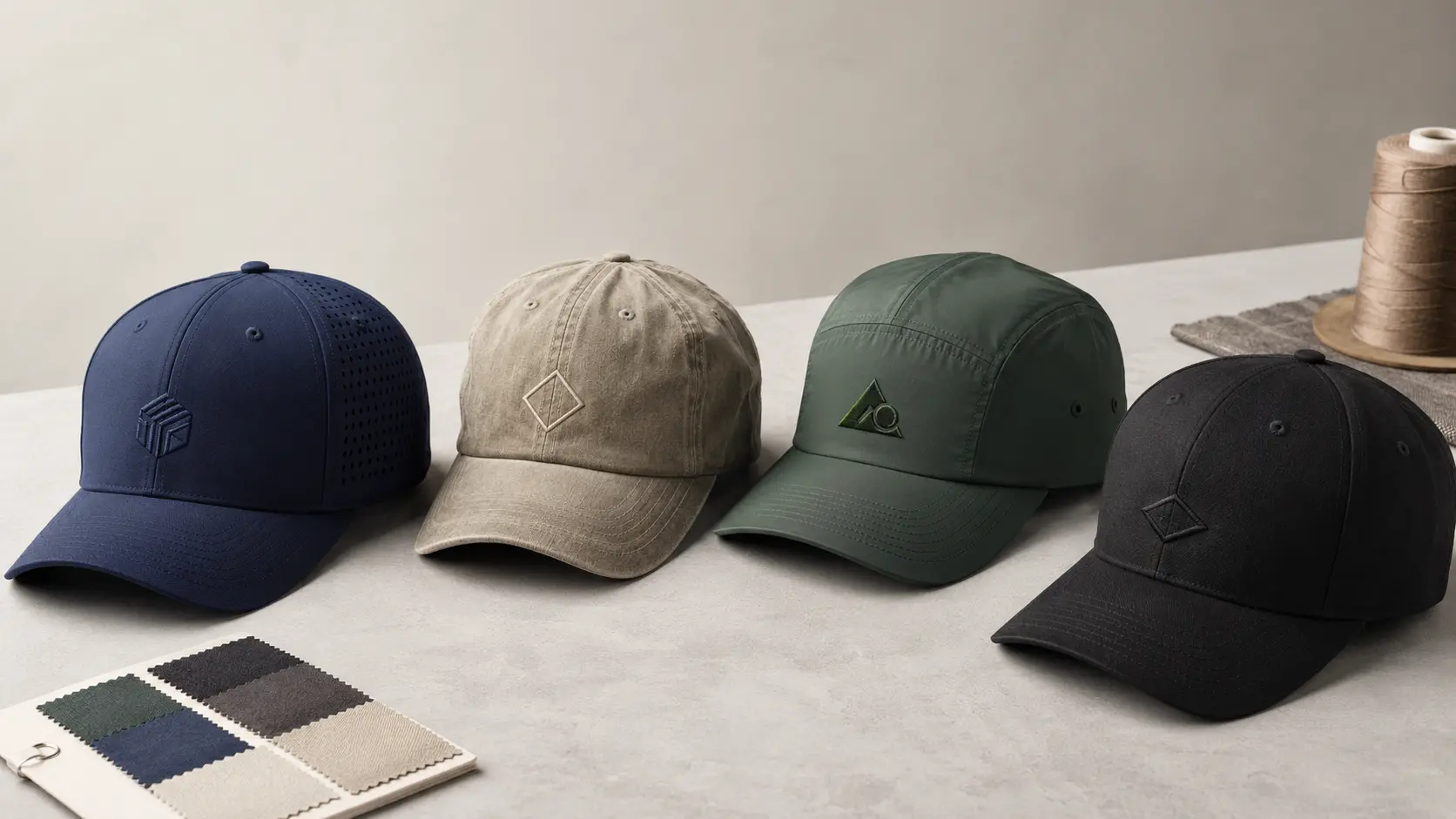
Testing only the easiest solid panel can create a misleading file. Buyers should map the cap and identify every materially different zone. A six-panel performance cap may combine a woven front, laser-cut side panels, a lighter back fabric and a separately covered visor.
A laboratory can work from representative specimens instead of a complete cap for every test. Keep retained swatches from the approved material lot and mark their grain direction, face side, color and finish. Link those swatches to the performance cap tech pack.
| Cap zone | Reason to assess separately | Practical record |
|---|---|---|
| Solid crown panel | Usually provides the main material baseline | Fabric code and color swatch |
| Laser-perforated panel | Open area changes transmitted radiation | Hole diameter, spacing and pattern file |
| Mesh panel | Construction is visibly more open | Mesh code, weight and stretch direction |
| Visor cover | Shade and material transmission are separate factors | Top and underbill fabrics plus finished dimensions |
Define conditioning and end-use states
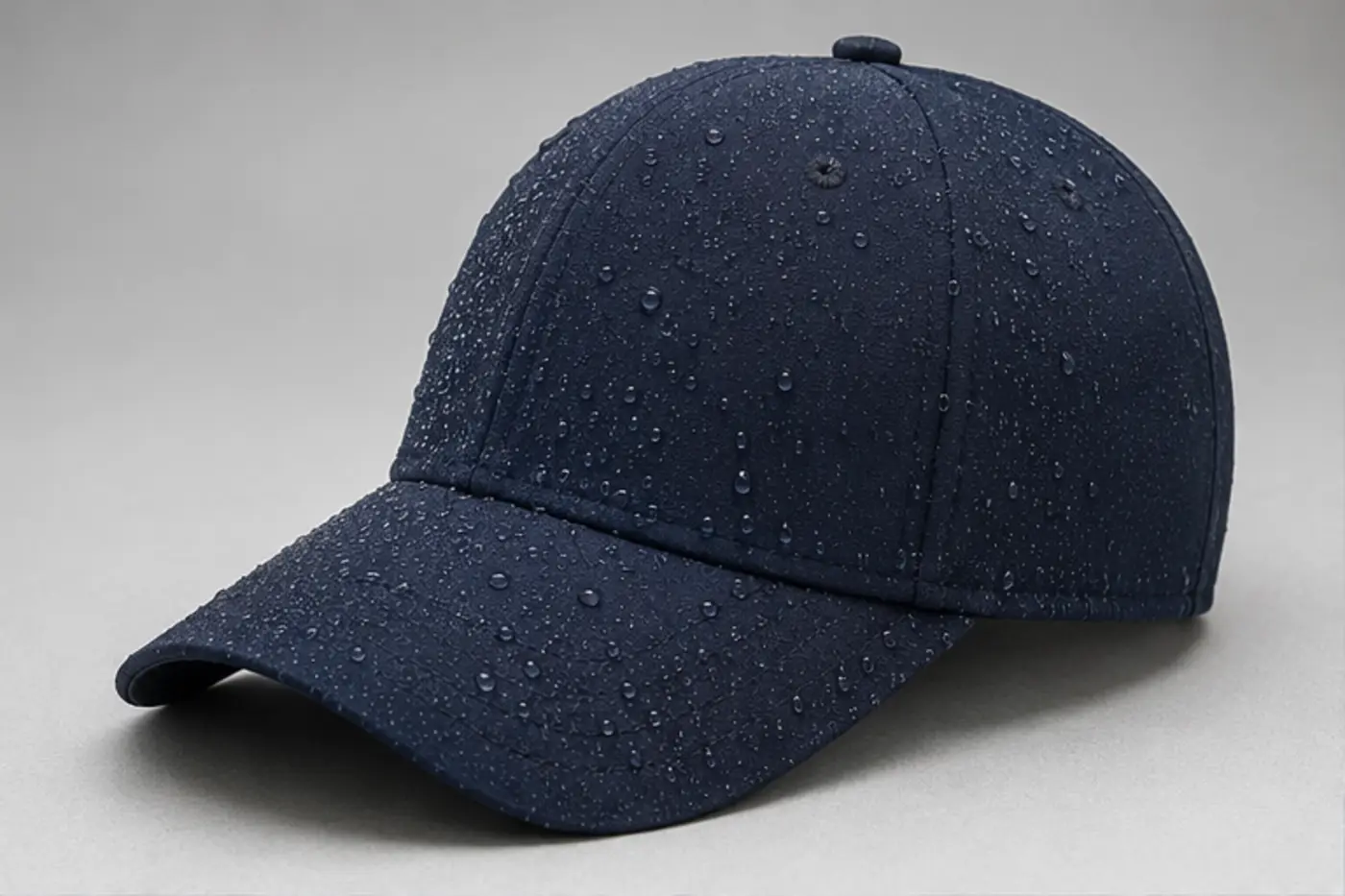
Running, golf and outdoor caps may become damp with sweat or rain. AATCC TM183 permits dry and wet specimen procedures, so the brief should say which condition represents the claim. Do not leave the laboratory to guess the wear scenario.
Pre-treatment also needs a written decision. If the brand expects repeated care, outdoor exposure or sustained stretch, ask the laboratory which conditioning sequence is appropriate for the intended market and label. Record every preparation step because a report without specimen history is difficult to reproduce.
Separate UPF performance from coverage design
A cap may use a high-performing textile and still offer limited shade. Visor length, visor width, curve and wearing angle affect the area covered. Treat those dimensions as product design controls and record them in the visor specification.
Claims should describe the protected material or covered area with care. The ASTM D6603 specification addresses labeling of UV-protective textiles and bases labeling on instrumental data. Market-specific legal review remains the brand's responsibility, especially when packaging, hangtags and online product pages use the same statement.
| Claim element | Control needed | Common mistake |
|---|---|---|
| UPF value | Report for the identified material and condition | Using a supplier swatch result for a changed fabric |
| Product coverage | Finished visor and crown dimensions | Implying protection for uncovered skin |
| Color range | Testing plan that represents approved colorways | Applying a dark-color result to every color |
| Care durability | Agreed pre-treatment and retained records | Publishing a permanent claim from an untreated specimen |
Approve the sample with traceable evidence
The approved sample should match the tested material code, color, finish and perforation pattern. Attach the report number to the sample approval record and keep a sealed fabric swatch. A photograph helps identify the cap, but it cannot replace material traceability.
Include the UPF line item in the sample approval checklist. If the second sample changes the fabric, finish, stretch or ventilation layout, review whether the existing report still applies before authorizing production.
Control changes between sample and bulk
Bulk control starts with material identity. Match purchase orders, roll labels and incoming inspection records to the approved fabric code. Check color and weight against the reference because an unreported substitution can affect both appearance and ultraviolet transmission.
Perforation settings also need control. Hole diameter, pitch and the unperforated margin around seams should match the approved pattern. The laser-cut perforation guide explains how those details can be documented for sampling and production.
Set a retest trigger instead of testing every shipment blindly
Routine bulk inspection can confirm identity and construction. Laboratory retesting is most useful when a change could alter performance. Triggers may include a new mill, yarn or finish, a lighter color, a revised perforation pattern, a different stretch level or a claim intended for another market.
Define those triggers in the quality plan. This keeps verification proportionate while preventing a report from following a product long after the tested construction has changed.
| Change | Buyer action | Record to retain |
|---|---|---|
| New fabric supplier | Review and normally retest the representative material | New report and sealed swatch |
| New color | Confirm whether the existing color plan covers it | Laboratory rationale or test result |
| Revised perforation | Reassess the affected zone and claim wording | Approved pattern revision |
| Finish or care change | Repeat the agreed conditioning sequence when applicable | Updated test brief and report |
Avoid the evidence gaps that delay launches
Three gaps cause most approval friction. The report does not name the production fabric, the tested specimen differs from the ventilated cap, or marketing copy promises protection beyond the evidence. Resolve all three before packaging is printed.
Do not copy a UPF number from a mill brochure into a finished-cap product page. Ask for the full report, check specimen identity and decide whether the brand needs component testing or finished-product sampling. Record the answer in the sample-to-bulk quality plan.
Build the RFQ around decisions a factory can quote
An RFQ should state the target market, claim wording under review, cap construction, fabric codes, color range, perforation details, test condition, report responsibility and required delivery date. That information allows a factory and laboratory to estimate sample quantity, timing and cost without repeated clarification.
Use the performance cap RFQ checklist to align the testing brief with logo, packaging and production requirements. Keep the target value as a buyer-approved specification, not an assumed factory default.
Frequently asked questions
Does one UPF report cover every cap color
No. Color and finish can affect ultraviolet transmission. The testing plan should state which colorways are represented and when another color requires evidence.
Can a perforated panel use the result from solid fabric
Do not assume that it can. Open area changes the construction, so the claim scope should exclude that zone or use evidence agreed with the laboratory.
Should performance cap fabric be tested wet
Wet testing is relevant when the cap is intended for running, rain or heavy perspiration. The buyer should define the condition with the laboratory before testing.
Does UPF measure how much of the face a visor protects
No. UPF measures ultraviolet transmission through material. Visor dimensions and wearing position determine shade coverage and require separate design review.
When should a brand retest a UPF fabric
Review retesting after changes to supplier, fiber, construction, weight, color, finish, stretch, perforation or the market claim. Write the triggers into the quality plan.
What should a buyer send for a UPF cap quotation
Send your brand or website, cap style, quantity per style and color, vector logo file, target market, destination, required delivery date and proposed UPF claim. Include fabric or reference-sample details when available.
Prepare a development brief for JoinTop
For a custom UPF performance cap project, share your brand or website, cap style, quantity per style and color, vector logo file, target market, destination and required delivery date. Add the intended use, proposed coverage statement and any laboratory requirement. Kontakt JoinTop or use the inquiry form at the bottom of this page so the sample and test plan can be reviewed before quotation.


 DE
DE  EN
EN  ES
ES  FR
FR  AR
AR  JA
JA  KO
KO  RU
RU  PT
PT  IT
IT  TR
TR