

Golfers spend a surprising amount of time thinking about the weather. Before a round, they check the forecast. On the first tee, they study the clouds. By the seventh hole, they may already be wondering whether that “10% chance of rain” was actually a warning disguised as optimism.
Rain is part of outdoor golf, but playing with a wet, heavy cap does not have to be.
A well-designed waterproof golf cap helps keep a golfer’s head dry, directs water away from the face, and maintains a comfortable fit throughout the round. It combines weather protection with the lightweight feel, breathability, and clean appearance expected from modern golf headwear.
However, not every cap marketed for wet weather provides the same protection. Some fabrics resist only a few drops, while others are engineered for longer exposure to steady rain. Understanding the difference is essential for golf brands developing dependable performance headwear.

What Is a Waterproof Golf Cap?
A waterproof golf cap is designed to prevent rainwater from passing through the outer fabric and reaching the wearer’s head. It normally uses waterproof fabric, a protective membrane or coating, and construction details that reduce water penetration.
The cap must also remain practical for golf. It should be light enough for an 18-hole round, secure during a swing, comfortable in changing temperatures, and easy to carry in a golf bag.
This combination is harder to achieve than it appears. A completely sealed cap could keep water out, but it might also trap heat and moisture inside. That would turn the cap into a tiny personal greenhouse—not exactly the performance feature most golfers want.
A quality waterproof golf cap should balance:
- Waterproof protection
- Atmungsaktivität
- Leichtgewichtiger Komfort
- A secure fit
- Shape retention
- Quick-drying performance
- A clean, premium appearance
The best result comes from treating the cap as a complete system rather than relying on one waterproof fabric alone.
Waterproof and Water-Resistant Are Not the Same
The terms “waterproof” and “water-resistant” are often used as if they mean the same thing. They do not.
A water-resistant golf cap is designed to handle light rain, mist, or brief moisture exposure. Water may bead on the surface and roll off before soaking into the fabric. This can be useful during a short shower or an early morning round on a damp course.
A waterproof golf cap provides a higher level of protection. Its fabric and construction are intended to stop water from passing through during more consistent rainfall. A water-resistant cap may perform well when the weather produces a few scattered drops. A waterproof cap should be ready for the moment when the clouds stop being polite.
Brands should use these descriptions carefully. Calling a cap waterproof creates a clear customer expectation, and the fabric, seams, stitching, and overall construction must support that claim.
| Performance level | Typical construction | Suitable conditions | Appropriate claim |
|---|---|---|---|
| Wasserfest | Tightly woven synthetic fabric | Mist and brief light showers | Wasserfest |
| Water-repellent | Fabric with a DWR finish | Short exposure to light or moderate rain | Water-repellent |
| Wasserdicht | Membrane or coating plus protected seams and openings | Longer exposure to steady rain | Waterproof, when supported by testing |
The Fabric Is the First Line of Defense
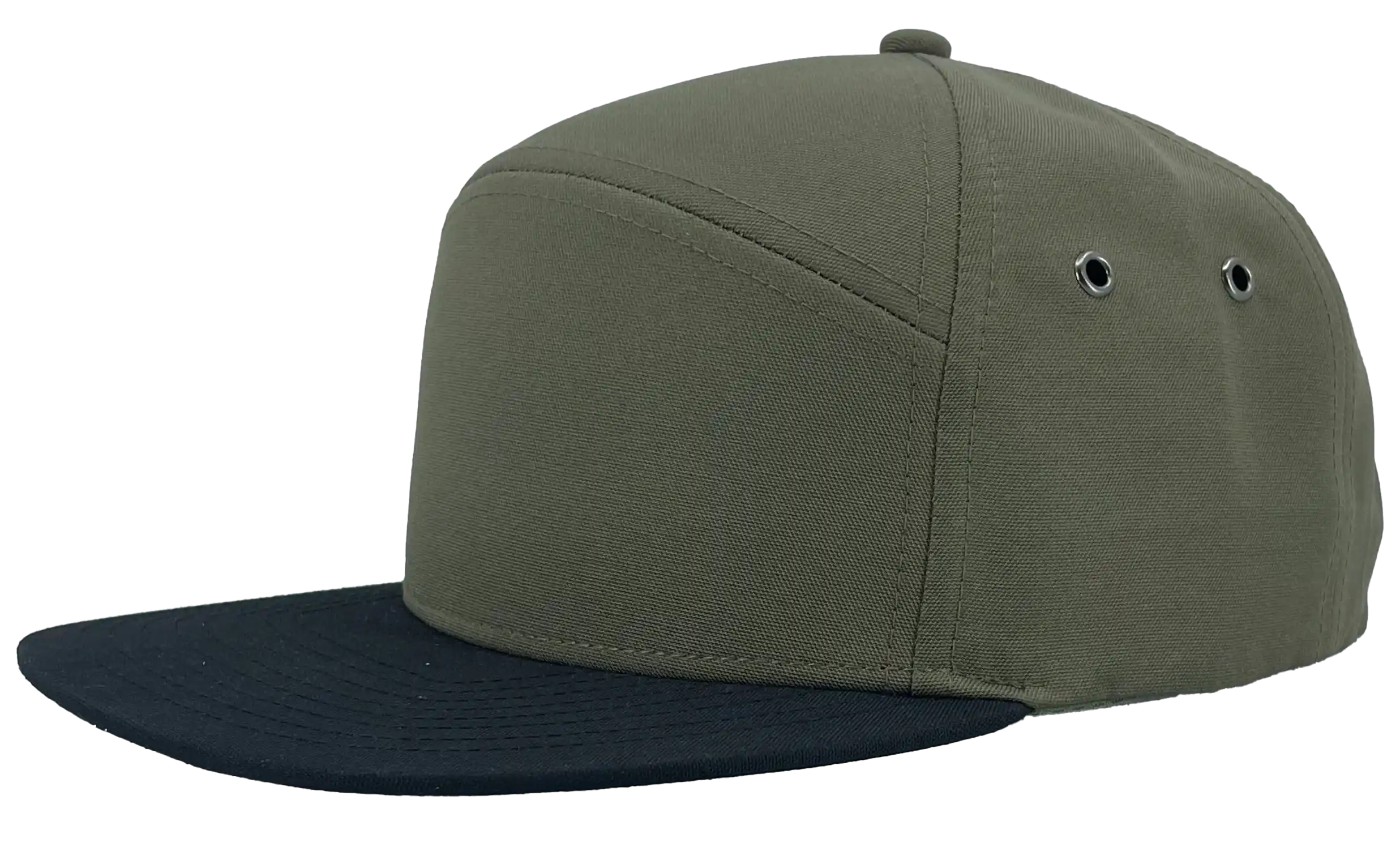
The outer fabric has a major influence on waterproof performance. Polyester and nylon are common choices because both can be lightweight, durable, and compatible with additional waterproof treatments.
Nylon often provides a smooth hand feel and good abrasion resistance. It works well for premium performance caps that need to feel light without appearing delicate. Polyester offers excellent dimensional stability and color performance. It is widely used in sports headwear because it can be engineered in different weights, textures, and stretch levels.
Some golf caps include spandex for flexibility. Stretch fabric can follow the golfer’s movement and improve comfort, but the membrane or coating must continue to work while the material stretches.
Fabric selection should reflect the intended use. A lightweight cap for occasional summer rain may need a different construction from one developed for regular play in cool, wet conditions.
Waterproof Membranes and Coatings
The outer fabric alone may not provide enough protection for a genuinely waterproof golf cap. A membrane or coating can create a stronger barrier against water.
A waterproof membrane is a thin layer bonded to the fabric. It is designed to block liquid water while allowing some moisture vapor to escape, helping balance waterproofness and breathability.
A coating is applied to the back or surface of the fabric. Depending on its formulation and thickness, it can provide effective water protection without adding excessive weight. The final material may use a two-layer, two-and-a-half-layer, or laminated construction. Each option affects softness, weight, flexibility, durability, and cost.
For golf headwear, the material cannot feel too stiff. A technically impressive fabric is not useful if the cap feels like it was borrowed from a camping tent. The finished product should still look and feel like premium sports headwear.
Brands comparing materials can also review JoinTop’s custom performance hat options and discuss stretch, hand feel, quick-drying performance, PFAS-free requirements, and target testing before sampling.
Why Seam Sealing Matters
Even excellent waterproof fabric can lose its advantage if water enters through stitching holes.
A golf cap contains several seams joining the front, side, and back panels as well as the visor. Every needle creates a small opening in the material. During steady rain, these holes can allow water into the cap.
Seam sealing addresses this issue. Special waterproof tape is applied over the seams inside the cap, and heat and pressure bond it to the fabric. This covers stitch lines and reduces water penetration.
The process requires careful control. Too little heat may produce weak bonding; too much can damage the fabric or waterproof layer. Curved seams also need accurate application to prevent wrinkles, gaps, and lifting. Taped seams should therefore be considered during the design stage, not added as an afterthought.
The Visor Must Manage Rain Properly
The visor does more than block sunlight. In wet weather, it helps direct rain away from the golfer’s face.
A well-shaped visor can reduce water reaching the eyes, glasses, and cheeks. That matters when a golfer is preparing for a shot and would rather focus on the ball than a drop of water hanging from one eyebrow.
The visor insert should resist moisture. Traditional paperboard or untreated materials may soften or lose shape after prolonged water exposure. A waterproof golf cap should use a durable, moisture-resistant insert. The crown-to-visor connection also deserves attention because it includes multiple stitch lines that can become leakage points.
Breathability Cannot Be Ignored
Blocking rain is only half the job. The cap must also manage heat and perspiration.
Breathability refers to the material’s ability to release moisture vapor from inside the cap. If breathability is too low, heat and sweat accumulate, leaving the golfer uncomfortable even when rain stays outside.
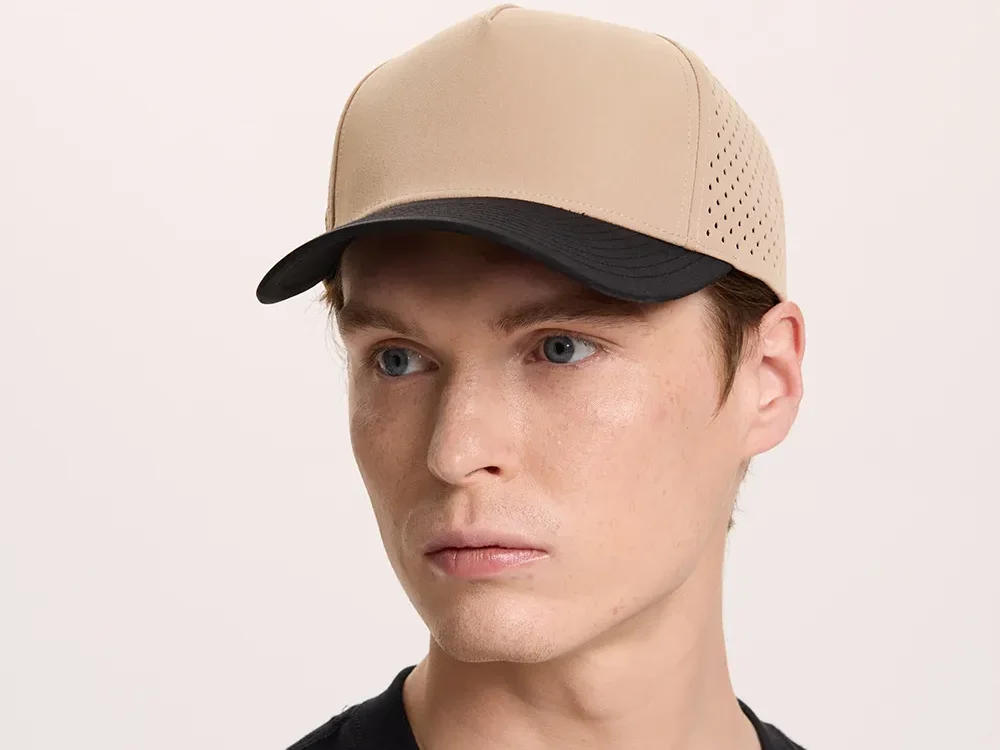
The entire cap construction matters. A thick lining, dense reinforcement, or poorly designed sweatband can reduce airflow. Laser-cut ventilation holes may help, but open holes can create direct entry points for rain. Protected ventilation structures or carefully positioned openings can provide a better balance.
The sweatband should be soft, quick-drying, and able to manage moisture. Polyester performance sweatbands are commonly used because they move perspiration away from the skin and dry faster than traditional cotton.
Fit and Stability During the Swing
A waterproof golf cap should remain secure during movement and wind. Golfers rotate their heads and bodies throughout the swing, and wet weather often arrives with stronger gusts.
The crown shape, closure, and sweatband all contribute to stability. An adjustable back closure provides a secure fit without excessive pressure. Options include hook-and-loop closures, plastic snaps, buckle straps, and flexible performance closures.
Closure materials should tolerate water exposure. Rusting hardware, water-absorbing straps, or slippery closures can shorten the cap’s useful life. A secure cap should not feel tight, either. Pressure around the forehead becomes uncomfortable during a four-hour round, so the pattern and sizing must distribute tension evenly.
Testing a Waterproof Golf Cap
Waterproof performance should be verified through testing rather than estimated by appearance. A fabric may look highly technical and still perform poorly after it is cut, stitched, and assembled.
Useful evaluations include:
- Hydrostatic pressure or water-resistance testing
- Spray testing and rain simulation
- Seam leakage inspection
- Water-repellency testing
- Breathability testing
- Seam-tape adhesion testing
- Repeated flexing and wear testing
- Colorfastness and dimensional-stability testing
Testing should cover both the fabric and the finished cap. Fabric-level results do not automatically represent the final product because sewing, embroidery, labels, and ventilation details can introduce new weak points. Test conditions should also reflect realistic use: a cap intended for short periods of light rain does not need the same specification as one designed for long rounds in consistently wet climates.
Zum Beispiel, AATCC TM127 evaluates resistance to water penetration under hydrostatic pressure, while spray and rain methods answer different questions about surface repellency and simulated exposure. Brands should agree with the manufacturer and laboratory on the method, sample preparation, and pass criteria rather than relying on appearance alone.
Logo Decoration Requires Special Attention
Logo application can affect waterproof performance. Standard embroidery creates many needle holes, especially when a design is large or densely stitched. These openings may allow moisture through the front panels.
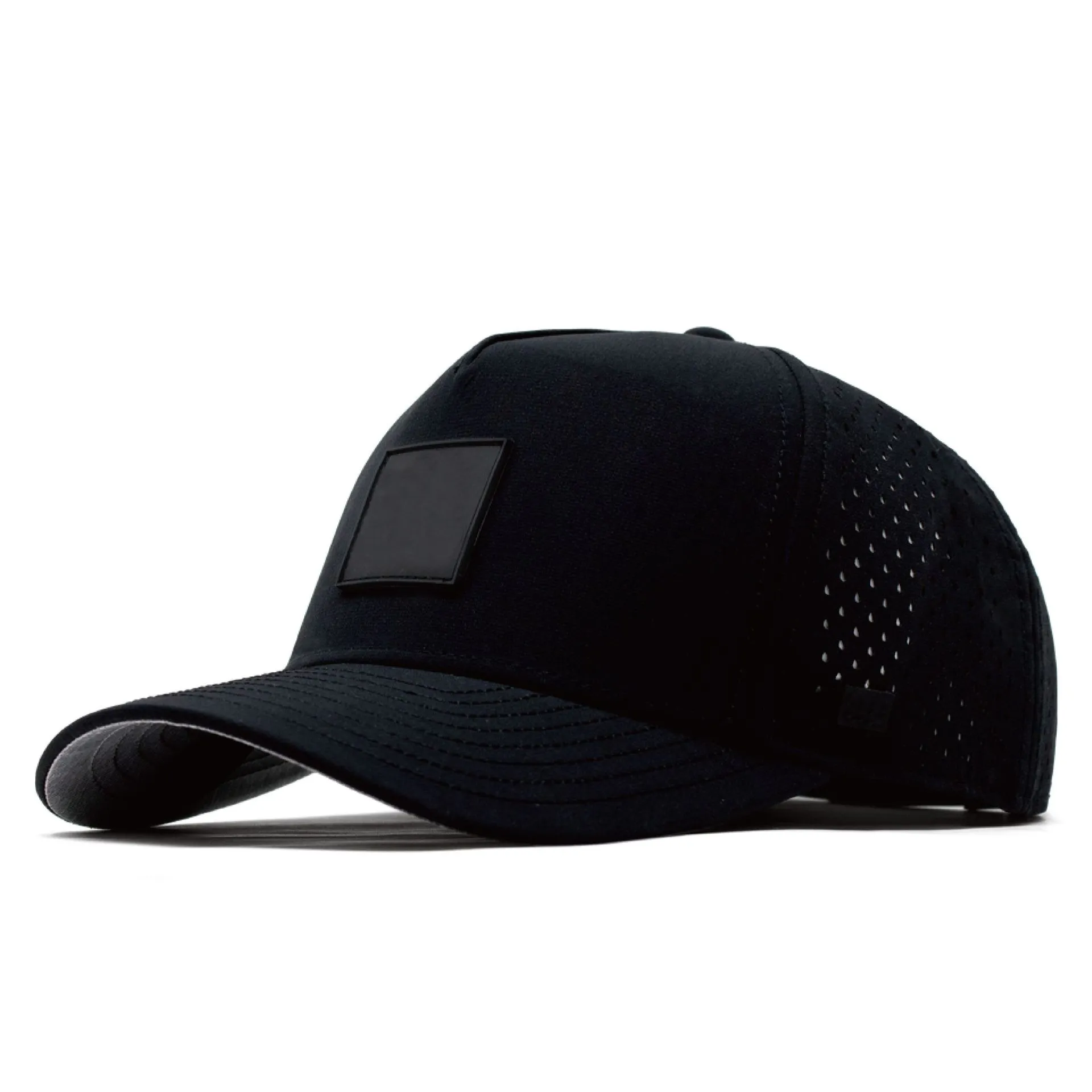
Embroidery is still possible, but the size, stitch count, location, backing, and internal sealing method require careful consideration. Alternatives include heat-transfer logos, silicone logos, TPU applications, and welded patches. These can create a clean, modern appearance with fewer stitch holes and sometimes a lighter result.
The correct method depends on the brand identity and performance requirements. A traditional golf brand may prefer embroidery, while a modern technical brand may choose a low-profile heat-transfer logo. Either way, decoration should be tested as part of the complete waterproof system.
See JoinTop’s custom cap decoration options for embroidery, silicone, TPU, heat-transfer, closures, and interior branding.
PFAS-Free Does Not Automatically Mean Waterproof
PFAS-free, DWR, and waterproof are separate specifications. A PFAS-free DWR finish may improve surface water beading, but it does not automatically stop water passing through the fabric or sewn construction. Brands should specify the chemistry requirement, intended product claim, and testing criteria separately. The U.S. EPA’s PFAS overview provides useful background on this group of chemicals and why brands are reviewing their material choices.
How to Care for a Waterproof Golf Cap
Proper care helps preserve the cap’s protective performance. Golfers should follow the brand’s instructions because waterproof materials and seam tapes can react differently to washing, heat, and detergent.
In general, aggressive machine washing, high-temperature drying, and strong chemicals may damage coatings or weaken bonded areas. Light dirt can often be removed with a soft cloth, cool water, and mild detergent. The cap should then air-dry naturally while maintaining its shape.
A wet cap should not stay crushed in a golf bag for several days. Besides producing an interesting smell that no technology department wants credit for, poor storage can affect shape and long-term performance.
Choosing the Right Waterproof Golf Cap
For consumers, the right cap should match the local climate and normal playing conditions. Important features include protected seams, a moisture-resistant visor, breathable fabric, a quick-drying sweatband, and a secure closure.
For golf brands, development should begin with a clear performance goal. The design team and manufacturer should agree on the expected rain protection, fabric weight, breathability, decoration method, fit, and testing requirements before sampling.
The sample should then be worn, adjusted, exposed to water, allowed to dry, and inspected for leaks or shape changes. A cap is a performance product, not simply a six-panel fabric display with a logo on the front.
Waterproof Golf Cap Development Checklist for Brands
Before requesting a sample, provide your supplier with the intended rain-protection claim, cap shape, structured or unstructured construction, fabric hand feel, stretch requirement, PFAS-free requirement, logo artwork, closure, estimated quantity, testing criteria, target price, and delivery date. Defining these items early reduces sample revisions and prevents a water-repellent concept from being mistaken for a fully waterproof product.
JoinTop supports waterproof and PFAS-free fabric sourcing, moisture-resistant visor inserts, seam-sealed construction, quick-drying sweatbands, multiple logo methods, and finished-cap testing. Our standard minimum order starts from 100 pieces per style and color. Review our sampling and cooperation process Und headwear production and quality-control process before beginning your project.
Frequently Asked Questions
Does a waterproof golf cap need taped seams?
For steady-rain use, protected or taped seams are normally recommended because sewing creates needle holes through the waterproof layer. The required coverage depends on the construction and the brand’s verified performance claim.
Can embroidery make a waterproof cap leak?
Yes. Dense embroidery creates many needle holes. Brands can reduce the risk through logo placement, stitch-density control, internal sealing, or a bonded heat-transfer, TPU, or silicone alternative.
Is DWR the same as waterproofing?
No. DWR improves surface water beading. Waterproof performance concerns resistance to water passing through the material and finished construction.
Should brands test the fabric or the finished cap?
Both. Fabric data helps select the material, while the final decorated sample reveals problems introduced by seams, labels, ventilation, the visor, and logo application.
Abschließende Gedanken
A dependable waterproof golf cap helps golfers stay focused when the weather changes. It protects the head and face, manages moisture, maintains its shape, and remains comfortable throughout a round.
Its performance depends on more than waterproof fabric. The membrane, coating, seam tape, visor, sweatband, closure, ventilation, logo application, and testing process must all work together.
When those details are properly developed, the finished cap becomes more than a rainy-day accessory. It becomes a reliable piece of golf equipment—one that quietly does its job while the golfer concentrates on the next shot.
The cap cannot fix a slice, read the green, or stop a ball from finding the nearest pond. But at least it can keep the rain from making the situation worse.
Developing a waterproof golf cap for your brand? Send JoinTop your cap design, target rain-protection level, logo artwork, estimated quantity, and required delivery date. Our development team can recommend suitable fabrics, seam construction, visor materials, and decoration methods before sampling. Contact JoinTop for a custom waterproof golf cap consultation.

 DE
DE  EN
EN  ES
ES  FR
FR  AR
AR  JA
JA  KO
KO  RU
RU  PT
PT  IT
IT  TR
TR