

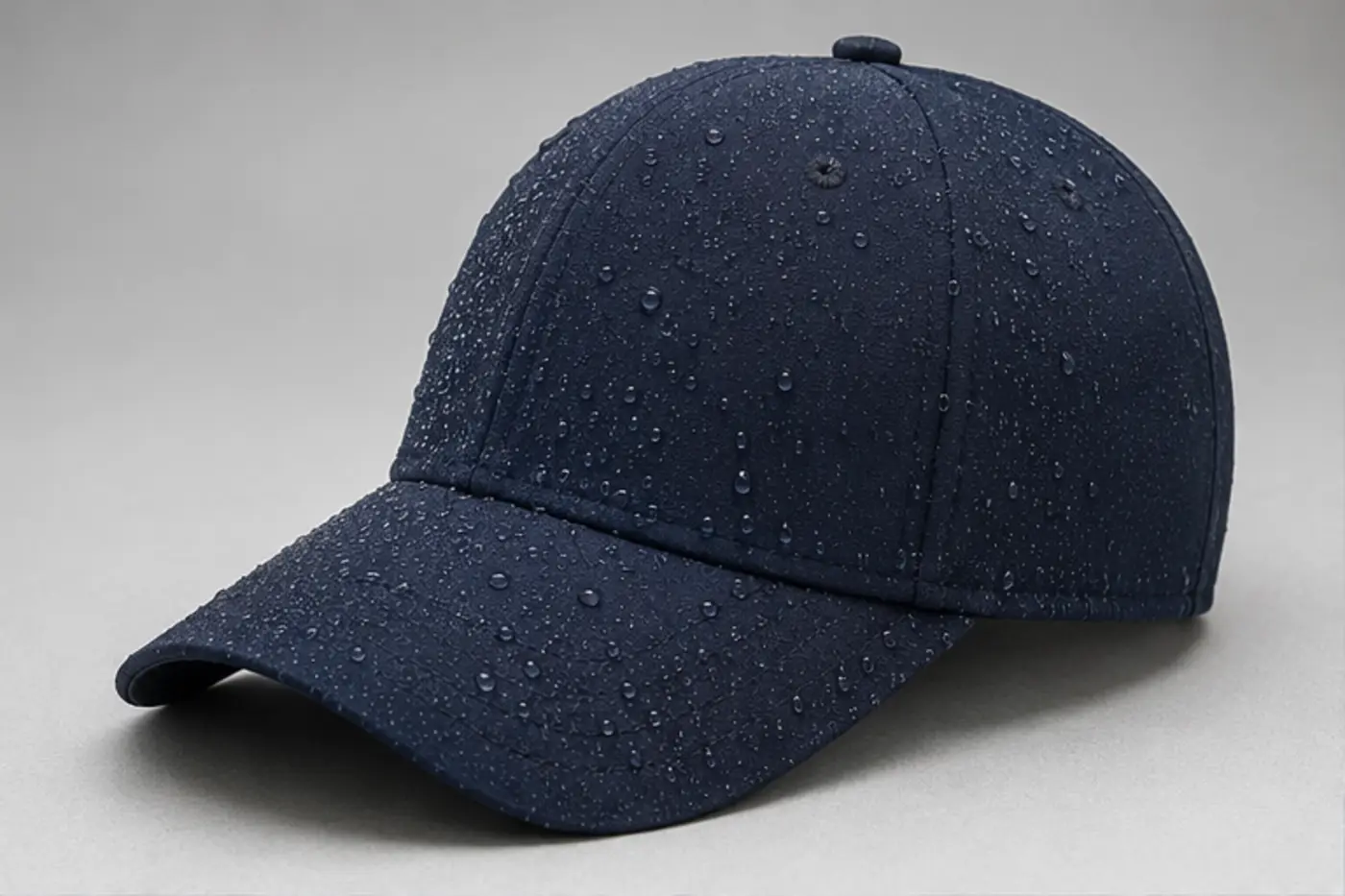
A waterproof performance cap specification must separate surface beading, resistance to water penetration and leakage through the finished cap. A spray result can show how the fabric surface wets, while hydrostatic pressure measures penetration through fabric. Neither result proves that crown seams, embroidery holes, closures or ventilation openings will keep rain out. Brand buyers should define the intended weather exposure, shell test, seam construction, logo method, conditioning and finished-cap checks before using waterproof or water-resistant language.
Use the right water claim for the intended cap
Water resistant is often the more accurate description for a lightweight performance cap with a repellent finish and ordinary stitched seams. Waterproof requires a stricter system that controls shell penetration, seam leakage and every opening. The product architecture must support the wording.
A golf cap for passing showers has a different duty from headwear intended for sustained rain. Write the use case in minutes of exposure, rain intensity or an agreed laboratory method. Marketing language can follow only after the construction and evidence are settled.
| Claim | Evidence focus | Construction implication |
|---|---|---|
| Water repellent | Surface wetting and beading | Repellent face finish may be enough for the stated use |
| Water resistant | Surface wetting plus limited penetration control | Fabric, seams and openings need a defined check |
| Waterproof fabric | Hydrostatic or another agreed penetration result | The claim applies to the tested textile, not automatically to the cap |
| Waterproof cap | Material and finished-cap leakage evidence | Seam sealing and opening design normally become central |
Separate spray testing from penetration testing
ISO 4920 specifies a spray test for resistance to surface wetting. Its official scope states that the method is not intended to predict rain penetration because it does not measure water passing through the fabric. This distinction prevents a good beading result from being presented as proof of a waterproof product.
AATCC TM127 measures resistance to penetration under hydrostatic pressure. Its scope also notes that results may differ from rain or spray methods. Choose the method that matches the claim, and record apparatus, specimen conditioning and pass criteria in the testing brief.

Specify every layer in the shell system
A laminated shell may combine face fabric, membrane and backing. A coated shell may use a single fabric with a film on the inside. Record composition, weight, construction, coating or membrane type, finish and approved color. A generic fabric name cannot hold a repeatable performance target.
Breathability and water resistance trade against each other in many constructions. Do not pick a shell from a hydrostatic result alone. Review hand feel, stiffness, air movement and the finished crown shape with the breathability test plan.
| Shell detail | Specification record | Risk if omitted |
|---|---|---|
| Face fabric | Fiber, weave or knit, weight and color | Bulk hand feel or appearance shifts |
| Barrier layer | Coating or membrane identity and side | Penetration performance changes |
| Repellent finish | Finish code and chemical compliance statement | Beading claim cannot be traced |
| Support layer | Lining or backing construction | Crown stiffness and moisture comfort change |
Control seams, needle holes and panel openings
Stitching makes holes through the shell. A material can resist water while crown seams leak. If the cap is sold as waterproof, define seam tape width, placement, bonding temperature and inspection points. Curved crown seams need careful bonding because wrinkles and abrupt changes in thickness can leave channels.
Laser perforations and mesh cannot sit inside an unrestricted waterproof area. Either remove them, protect them with a suitable construction or limit the claim. The same applies to eyelets and exposed adjustment openings.
Map the water-sensitive zones on the technical drawing. Mark where seam tape starts and stops, how it crosses the crown junction and how the visor seam is treated. A written map helps sampling, costing and inline inspection use the same construction instead of relying on a finished cap that hides the inside details.
Choose logo methods that support the claim
Embroidery punctures the shell and can pull a membrane around dense stitch areas. Heat-transfer graphics or bonded patches can reduce needle holes, but their adhesive system must suit the face finish and heat tolerance. A sewn patch still needs a leakage decision.
Approve logo placement, size and process on the actual shell. Do not transfer a heat setting from ordinary polyester to a laminated textile without trials. Check face gloss, adhesive edge lift, membrane damage and water entry around the decorated area.
| Logo method | Water-control concern | Sample check |
|---|---|---|
| Direct embroidery | Needle holes and dense stitch tension | Leakage around the full logo area |
| Heat transfer | Heat compatibility and edge adhesion | Surface damage, lift and post-conditioning adhesion |
| Bonded silicone patch | Adhesive match with repellent finish | Peel at corners and after moisture exposure |
| Sewn patch | Perimeter needle holes | Back-side sealing and visual alignment |
Handle PFAS-free DWR as a separate evidence line
A finish may provide surface repellency without intentionally added PFAS, but visual beading cannot verify chemical composition. Request a supplier declaration tied to the finish code and testing required for the destination market. Keep that file separate from the physical water-performance report.
If the finish changes, repeat the relevant performance check and update compliance documents. A strong spray rating does not prove PFAS-free status, and a PFAS-free statement does not promise a particular spray rating.
Condition samples for realistic use
Repellent finishes and seam bonds can change after abrasion, flexing, sweat, care or heat. Select conditioning that reflects the brand's instructions and target use. State whether results apply to an unused sample or to a sample after a defined treatment.
Pair the water plan with abrasion control и dimensional stability checks. A shell that passes an initial test can still fail as a product if the surface finish wears unevenly or the seam tape lifts.
Approve both the fabric and finished cap
Fabric reports belong in the approval file, but the finished sample reveals construction paths. Inspect crown seams, visor attachment, top button, logo, sweatband stitching and back opening. Use a repeatable spray or exposure setup agreed by the buyer and factory.
Photograph the sample before and after the check. Record the water source, duration, angle, quantity and leakage locations. Avoid an informal sink test with no method because another team cannot reproduce it during bulk inspection.
Design drainage and comfort around the claim
Keeping water out is only one part of a wearable cap. Moisture that enters through the back opening or runs under the visor needs a path away from the face. Review sweatband absorption, lining coverage, closure material and the point where seam tape meets the back opening.
A tightly sealed crown can feel warmer than the original performance-cap concept. Run fit and wear reviews in the same sample round as the water checks. Record whether the cap traps condensation, changes shape when wet or becomes noticeably heavier. Those observations help the brand choose accurate wording and a construction customers can use for the intended activity.
| Approval stage | Evidence | Release decision |
|---|---|---|
| Material selection | Shell construction and relevant test report | Whether to build a functional sample |
| Decoration trial | Appearance, adhesion and localized leakage record | Whether the logo process is compatible |
| Finished sample | Seam map and repeatable exposure record | Whether the claim and cap can be approved |
| Bulk production | Incoming material identity and workmanship checks | Whether each lot can be released |
Write bulk controls around failure locations
Incoming inspection should confirm shell code, finish code, color, weight and roll identity. Production inspection should check seam tape position, bonding continuity, stitch damage and logo application. Final inspection should include visual workmanship and an agreed sample of functional checks.
The seam strength guide remains relevant because a watertight seam also has to survive wear. Water control cannot replace structural testing.
Define the sampling level and failure rule before production begins. A single isolated drop at a back opening may be treated differently from continuous leakage through a crown seam. The decision belongs in the signed approval file so inspectors do not create a new interpretation at the packing stage.
Avoid wording that outruns the construction
Do not call a cap waterproof because water beads on a fabric swatch. Do not use a membrane result for a perforated finished cap without limiting the statement. Avoid comparing laboratory numbers produced by different methods or conditioning.
Use precise product copy such as water-repellent shell or seam-sealed waterproof construction only when the evidence matches. Keep the approved wording in the tech pack and packaging file so sales, design and production use the same claim.
Frequently asked questions
Is a spray test enough to call a cap waterproof
No. A spray test evaluates surface wetting. Waterproof product language also needs evidence for penetration, seams, decoration and openings.
Can a laser-perforated cap be waterproof
Open perforations conflict with an unrestricted waterproof area. The design needs a protected construction or narrower claim wording.
Does DWR make a fabric waterproof
DWR can improve surface beading and reduce wetting. It does not by itself prove resistance to pressure or leakage through seams.
Is embroidery suitable for a waterproof cap
It can be used when the needle holes and backing are addressed. The decorated sample needs a leakage check tied to the proposed claim.
How should PFAS-free status be verified
Use supplier declarations and any chemical testing required for the target market. Water beading and spray ratings do not verify chemical composition.
What should a buyer send for a waterproof cap quotation
Send your brand or website, cap style, quantity per style and color, vector logo file, target market, destination, required delivery date, intended weather use and proposed water claim.
Prepare a waterproof cap development brief
Share your brand or website, cap style, quantity per style and color, vector logo file, target market, destination and required delivery date. Add the rain-use scenario, shell preference, seam requirement, logo process and claim under review. Связаться JoinTop or use the inquiry form at the bottom so the sample and testing route can be defined before quotation.



 RU
RU  EN
EN  ES
ES  FR
FR  AR
AR  JA
JA  KO
KO  DE
DE  PT
PT  IT
IT  TR
TR